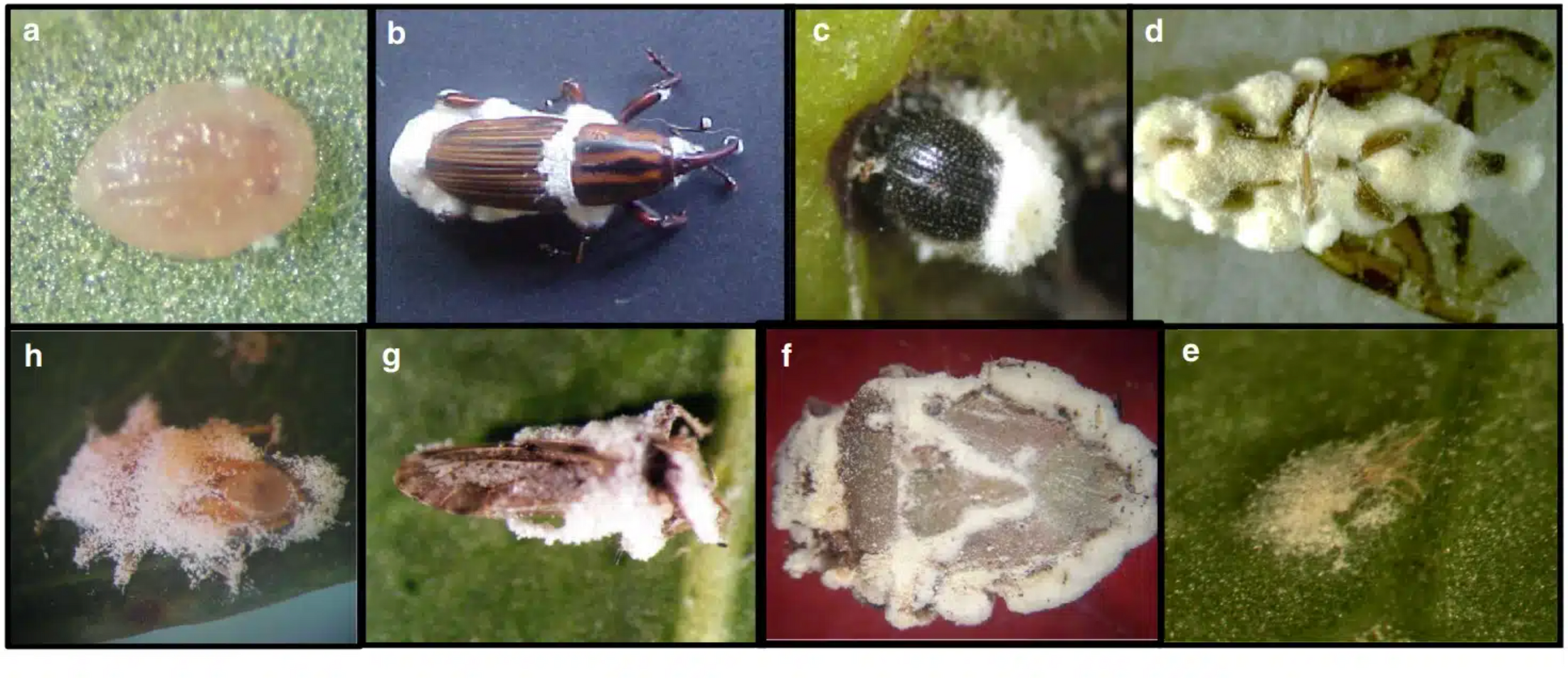
What is Beauveria bassiana used for?
Beauveria bassiana is used as a biological insecticide for controlling over 200 insect pest species including aphids, whiteflies, thrips, caterpillars, beetles, termites, and soil grubs across cereals, vegetables, fruits, and ornamental crops, providing eco-friendly pest management in integrated pest management systems.
What disease is caused by Beauveria bassiana?
Beauveria bassiana does not cause disease in plants. Instead, it causes mycosis (fungal infection) in target insect pests. The fungus penetrates the insect cuticle and proliferates within the hemolymph, producing secondary metabolites (beauvericin, bassianolide, tenellin, and oosporein) that disrupt insect physiological processes, leading to insect death within 3-14 days. This pathogenic effect is species-specific to insects and poses no threat to plant health.
What does Beauveria bassiana kill?
Beauveria bassiana effectively targets a broad spectrum of insect pests, including: Aphids, Rice Leaf Folder, Helicoverpa armigera, Spodoptera litura, Loopers, Bunch Caterpillars, Leaf-Eating Caterpillars, Mealy Bugs, Coffee Berry Borers, Fruit Borers (Brinjal, Tomato, Chili, and Vegetables), Cotton Bollworm, Root Grubs, Surface-Living Larvae and Nymphs, Termites, Thrips, Whiteflies, and Beetles. Research demonstrates mortality rates of 80-100% against target species under field conditions. View more in details here: what does Beauveria bassiana kill?
When to apply Beauveria bassiana?
Timing depends on crop type:
Annual Crops: Apply at early insect emergence stage or during peak pest activity
Long Duration Crops / Perennials / Orchards: Apply twice yearly - before the onset of monsoon/rainfall/spring season and after the main monsoon/rainfall/autumn/fall season
Preventive Applications: Mix with compost and apply at early life stages of the crop
Optimal Conditions: Apply in cool, humid conditions (early morning or late evening) for best spore viability and adhesion to target pests
View more in details about when to apply Beauveria Bassiana?
How to use Beauveria bassiana for plants?
Beauveria bassiana can be applied using multiple methods:
Foliar Application (Spray on leaves):
Wettable Powder (1×10⁸ CFU/g): Mix 2 kg per acre (5 kg/ha) in sufficient water
Soluble Powder (1×10⁹ CFU/g): Mix 200 g per acre (500 g/ha) in sufficient water
Spray thoroughly to ensure coverage of affected foliage
Do not store solution for more than 24 hours after mixing
Soil Application (Drench):
Wettable Powder: 2-5 kg per acre (5-12.5 kg/ha)
Soluble Powder: 200-500 g per acre (500 g-1.25 kg/ha)
Mix with sufficient water and drench soil at early insect emergence stage
For long-duration crops, apply near the root zone during off-season
Drip Irrigation:
Filter the solution if there are insoluble particles
Add to drip tank at recommended doses
Ensures uniform distribution and soil colonization
Compatibility Tip: Beauveria bassiana is compatible with bio-pesticides, bio-fertilizers, and plant growth hormones but NOT compatible with chemical fertilizers and chemical pesticides. View more info: How to use Beauveria bassiana for plants?
Can Beauveria bassiana infect humans?
Beauveria bassiana poses minimal risk to humans with EPA toxicity studies showing no pathogenicity in mammals, though rare opportunistic infections in severely immunocompromised patients have been reported; manufacturing personnel surveillance since 2008 shows no infectivity or sensitization effects, making it safe for agricultural workers when proper protective equipment is used. Get detailled information about Can Beauveria bassiana infect humans.
Is Beauveria bassiana safe for bees?
Research indicates Beauveria bassiana has minimal impact on honey bees with mortality rates considered negligible in field studies, though some sublethal effects including altered cuticular profiles and moderate brood mortality have been observed at high exposure levels; it can be applied to non-bee attractive plants without significant colony risks.
Is Beauveria bassiana effective against bed bugs?
Beauveria bassiana demonstrates high efficacy against bed bugs with commercial formulations like Aprehend achieving 80-100% mortality within 7-14 days, effectively penetrating pyrethroid-resistant populations through contact exposure, with horizontal transfer capabilities spreading infection throughout bed bug aggregations for enhanced population control.
How to apply Beauveria bassiana?
Apply spores directly to crops using spraying methods. Ensure even coverage on foliage for effective pest control.
What is Beauveria bassiana used for?
It is used as a biological insecticide to control termites, thrips, whiteflies, aphids, beetles, and other pests.
How long does Beauveria bassiana take to work?
It typically kills insects within 3–14 days after infection, depending on pest and environmental conditions.
Can Beauveria bassiana be used indoors?
Yes, it can be applied indoors in controlled environments for pest management.
What insects does Beauveria bassiana target?
It targets termites, thrips, aphids, whiteflies, beetles, and other similar insect pests.
What are commercial applications of Beauveria bassiana?
Used in agriculture for eco-friendly pest control, reducing chemical pesticide usage and supporting sustainable farming.
What are the benefits of Beauveria bassiana?
Environmentally friendly, biodegradable, specific to pests, effective long-term, and safe for humans and beneficial insects. Get more information about major benefits of Beauveria bassiana.
How to use Beauveria bassiana for insect management?
Spores attach to insect cuticles, penetrate, colonize internally, release toxins, and eventually kill the pest.
What are the role of Beauveria bassiana in integrated pest management?
It provides targeted, sustainable pest control, reducing chemical pesticide reliance and supporting IPM programs. Visit here to know about its biological pest control.