What Are the Different Types of Nitrogen-Fixing Bacteria?

Updated: 3 days ago

What Are the Different Types of Nitrogen-Fixing Bacteria?
Nitrogen-fixing bacteria do not all work in the same place or form the same relationship with a crop. Some live freely in soil, some associate closely with root surfaces, and some live inside specialized root nodules. Those differences decide how much of the nitrogen they fix actually reaches the plant.
The three main types discussed in agriculture are symbiotic, free-living, and associative. Rhizobium, Azotobacter, and Azospirillum are the organisms most often used to illustrate them. A fourth group, the endophytes, is worth knowing because it does not fit neatly into any of the three.
This guide explains each type, how it interacts with plants and soil, what it contributes to biological nitrogen fixation, and what it means for soil fertility and long-term ecosystem health. It also states plainly where the evidence stops.
What Are Nitrogen-Fixing Bacteria?
Nitrogen-fixing bacteria, collectively called diazotrophs, convert atmospheric nitrogen gas (N₂) into ammonia that living systems can use. They do this with the nitrogenase enzyme, which is found naturally only in certain microorganisms, including Rhizobium, Frankia, Azospirillum, and Azotobacter [1].
Nitrogenase is sensitive to oxygen, which creates a biological problem: most of these organisms also need oxygen to generate the energy that fixation demands. Different groups solve it in different ways — compartmentation in cyanobacteria, high respiratory activity in Azotobacter, and leghemoglobin inside legume nodules [1].
An important point often lost in simplified explanations: nitrogen fixation is a functional ability, not a taxonomic group. Diazotrophs are found among alphaproteobacteria, gammaproteobacteria, betaproteobacteria, Firmicutes, and cyanobacteria, so the categories below describe ecological relationships, not branches of a family tree [5].
Why the Type of Bacterium Matters
What Are the Different Types of Nitrogen-Fixing Bacteria?
Where a bacterium lives determines how directly its fixed nitrogen can reach a crop.
In an effective legume nodule, fixed nitrogen is transferred to the host plant through a specialized partnership [1]
Outside a nodule, newly fixed nitrogen often stays in microbial biomass first and reaches plants through turnover and rhizosphere processes [5]
Host compatibility is specific: a Rhizobium that nodulates cowpea may not nodulate another legume at all [1]
Growth benefits can come from mechanisms other than nitrogen fixation, including effects on root development and nutrient acquisition [11]
A nitrogen-fixing organism on a label is not the same as a defined nitrogen credit in the field.
Symbiotic Nitrogen-Fixing Bacteria
Symbiotic diazotrophs form structured partnerships with compatible host plants. The best-known are the rhizobia — Rhizobium, Bradyrhizobium, Ensifer, and Mesorhizobium — which induce root nodules on legumes. The plant supplies carbon from photosynthesis; the bacteria supply fixed nitrogen [1].
This is the strongest established nitrogen-fixation system in agriculture. Legume symbioses have been reported to fix in the range of 100 to 300 kg of nitrogen per hectare per year, depending on the system [3]. That figure describes what well-functioning legume systems can achieve in the literature. It is not a value that can be assigned to a product.
Host specificity is the practical constraint. A meta-synthesis of rhizobial inoculation trials in Ghana found average yield changes ranging from 61.7% in cowpea down to 19.8% in groundnut, with individual strains differing markedly — cowpea yield rose 1.48-fold with strain BR 3299 and 1.16-fold with KNUST 1006 [4]. Same category, same crop group, very different outcomes.
Key characteristics of symbiotic nitrogen fixers:
Form visible nodules on the roots of compatible hosts
Deliver fixed nitrogen directly to the host plant
Require a correct strain-to-host match to work at all
Depend on successful nodulation, not merely on reaching the root
Are the basis of established legume inoculant practice
Nodule formation alone does not guarantee a substantial nitrogen supply if the partnership is ineffective.
Free-Living Nitrogen-Fixing Bacteria
Free-living diazotrophs fix nitrogen without forming a nodule or requiring a host. They are diverse and widely distributed in cropland, and they represent a key natural nitrogen source in soils that lack symbiotic nitrogen fixation [2].
Azotobacter vinelandii is the standard example. It is aerobic, and it protects its oxygen-sensitive nitrogenase largely through high respiratory activity [1]. Some Azotobacter species also form cysts, which confer resistance to environmental stress — a trait of direct interest to inoculant formulation [2].
Free-living does not mean independent of context. In a 2024 laboratory study, A. vinelandii co-cultured with Bacillus subtilis doubled its nitrogen inputs under nitrogen-limited conditions, but was outcompeted by B. subtilis when nitrogen was plentiful [6]. Neighboring microorganisms and soil nitrogen status both shape what a free-living fixer actually does.
Key characteristics of free-living nitrogen fixers:
Fix nitrogen in soil without a dedicated plant structure
Depend on available organic carbon for energy
Contribute to soil and rhizosphere nitrogen cycling
Are influenced by existing soil mineral nitrogen and by other microorganisms
Do not deliver nitrogen to a crop as directly as an effective nodule symbiosis
Fixation in soil and nitrogen arriving in the crop are two different questions.
Associative Nitrogen-Fixing Bacteria
Associative diazotrophs live on or immediately around roots, in the root-influenced zone called the rhizosphere. Compounds released by roots supply energy, but no specialized nodule is formed [11].
Azospirillum brasilense and Azospirillum lipoferum are the familiar examples, studied mainly with cereals and grasses such as maize, wheat, rice, and sorghum. They are distinct species and should not be treated as interchangeable simply because they share a genus name.
Their agricultural interest extends beyond nitrogen. Root-growth responses and changes in nutrient acquisition can also contribute to plant performance [11], which means a greener, bigger plant does not by itself show how much nitrogen came from the atmosphere. The honest boundary is stated directly in the cereal literature: nitrogen fixation levels achieved with nitrogen-fixing bacteria in cereals are not high enough to support the plant's needs, and are not comparable to fertilizer or to legume-rhizobium symbiosis [5].
Key characteristics of associative nitrogen fixers:
Colonize root surfaces and the surrounding rhizosphere
Depend on root exudates for carbon and energy
Are studied primarily in cereals and grasses
May influence root architecture as well as nitrogen supply
Do not meet the full nitrogen demand of a cereal crop
Treat associative inoculants as a contribution to a nutrition program, not a substitute for one.
A Fourth Group: Endophytic Nitrogen-Fixing Bacteria
Some diazotrophs live inside plant tissues without forming nodules. These are endophytes, and they are worth separating from the three main types because their position is different again.
Gluconacetobacter diazotrophicus PAL5 is the best-documented example, associated with sugarcane. Its complete genome sequence identified nitrogen fixation genes alongside traits linked to the endophytic lifestyle, including sugar metabolism, auxin synthesis, and tolerance of acidic conditions [7].
Two cautions apply. Being an endophyte does not automatically mean an organism fixes nitrogen. And a genome study identifies biological capability; it does not establish a consistent nitrogen contribution for every formulation or crop [7].
Comparing the Main Types
Type | Where it lives | Representative examples | How nitrogen reaches the plant | Where it lives |
|---|---|---|---|---|
Symbiotic | Inside root nodules of compatible hosts | Rhizobium leguminosarum, Bradyrhizobium japonicum | Transferred directly to the host through the symbiosis | Symbiotic |
Free-living | Soil, no dedicated plant structure | Azotobacter vinelandii | Indirectly, via microbial turnover and soil processes | Free-living |
Associative | Root surface and rhizosphere | Azospirillum brasilense, A. lipoferum | Through close association; contribution is partial | Associative |
Endophytic | Inside plant tissues | Gluconacetobacter diazotrophicus | Through internal colonization; strain-dependent | Endophytic |
These categories overlap. A bacterium on a root surface may also colonize internal tissue, and a rhizobial strain can survive in soil outside a nodule.
Their Role in Biological Nitrogen Fixation
Biological nitrogen fixation is the energy-dependent microbial conversion of atmospheric N₂ into ammonia. Every type described above performs the same core reaction. What differs is the setting, the energy source, and what happens to the ammonia afterward.
Across the research base, inoculation with nitrogen-fixing and other plant growth-promoting microorganisms has been associated with improved biomass, nodulation, root density, and yield, most consistently in legumes [9]. Combining rhizobia with plant growth-promoting bacilli has been reported to increase nodulation, nitrogenase activity, plant nitrogen and phosphorus content, and grain yield across most of eleven grain legume crops examined — though a few cases showed decreases [8].
That same literature is candid about the limits. In a synthesis of 1,391 studies, roughly 31% reported inconsistent field performance and 28% flagged microbial viability and soil compatibility constraints [9].
Importance for Soil Fertility
Nitrogen-fixing bacteria contribute to soil fertility in more ways than the nitrogen balance alone.
Integrating legumes and their rhizobial partners into cropping systems has been associated with improvements in soil organic matter, nutrient availability, microbial activity, and water retention. Rotation, intercropping, green manuring, and alley cropping extend those benefits to companion and subsequent crops [3].
Rhizosphere microorganisms more broadly influence how nutrients become available to roots, including the mineralization steps that convert organic nitrogen into ammonium and nitrate [12].
Contributions to soil fertility include:
New nitrogen entering the system from the atmosphere rather than from fertilizer
Residual nitrogen left for the following crop after an effective legume
Increased soil organic matter through root and residue inputs
More active soil microbial communities in the root zone
Improved nutrient cycling and availability around roots
Soil fertility is built over seasons, not in a single application.
Sustainable Agriculture and Long-Term Ecosystem Health
Reducing dependence on manufactured nitrogen inputs is one of the clearest reasons for interest in these organisms. Biological nitrogen fixation is an essential source of new nitrogen for terrestrial ecosystems, and stimulating it in multi-species communities is an active route toward biofertilizer consortia [6].
Free-living diazotrophs matter here in a way that is easy to overlook. In natural and agricultural ecosystems that lack symbiotic nitrogen fixation, they represent a key natural nitrogen source [2]. Their contribution is diffuse rather than dramatic, but it is continuous.
The practical framing is integration, not replacement. Selected diazotrophs are an effective component of an integrated plant nutrition strategy, contributing positively to sustainable agricultural production [2] — alongside soil testing, balanced fertilization, and sound agronomy, not instead of them.
Long-term ecosystem benefits associated with biological nitrogen fixation include:
Lower reliance on manufactured nitrogen inputs where fixation is effective
Maintenance of soil organic matter and biological activity
More diverse and functional root-zone microbial communities
Nitrogen inputs distributed through biological processes rather than single applications
Cropping systems that build fertility across rotations
Any specific reduction in fertilizer rate must be validated for the exact strain, formulation, crop, and fertility program — not assumed from the category.
Genus, Species and Strain: Why the Name Is Only a Starting Point
Three levels of information should be kept separate when reading a label or a research paper:
Genus — a broad group, such as Azospirillum or Bradyrhizobium
Species — a more specific identity, such as Azospirillum brasilense
Strain — an identified lineage used in a study or product, such as G. diazotrophicus PAL5
Research on one strain cannot be assigned to all members of its species. Taxonomy also changes over time; older literature refers to Gluconacetobacter diazotrophicus as Acetobacter diazotrophicus, and some strains once classified as Bradyrhizobium japonicum have been reassigned to B. diazoefficiens. Current names can be checked in the List of Prokaryotic names with Standing in Nomenclature [14].
Best Conditions for Nitrogen-Fixing Bacteria
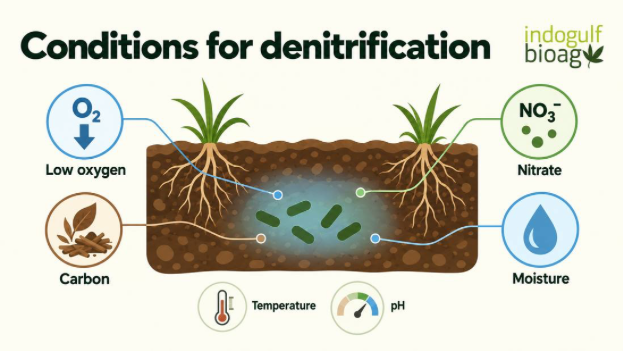
Nitrogen fixation is constrained by three groups of factors [1]:
Soil conditions — excessive moisture or drought, soil acidity, phosphorus deficiency, excess mineral nitrogen, and deficiencies of calcium and key micronutrients such as molybdenum, cobalt, and boron
Climate — extreme temperatures and insufficient light
Biological factors — absence of the required rhizobia, defoliation, competition, and pests
Performance is best when:
The strain is matched to a compatible host crop
Soil pH and phosphorus status are corrected before inoculation
Soil mineral nitrogen is not so high that fixation is suppressed
Moisture is adequate at and after application
The inoculant is stored correctly and remains viable at planting
Bacteria are placed close to the emerging root
Seed treatment chemistry has been checked for compatibility
Practical Tips for Farmers
To get the most from nitrogen-fixing inoculants:
Match the organism type to the crop: rhizobia for compatible legumes, associative or free-living organisms for other systems
Confirm host compatibility for the specific strain, not just the genus
Soil test before planting and correct phosphorus and pH limitations
Check the viable-cell concentration and the expiry date on the product
Store inoculants cool, dry, and out of direct sunlight
Inoculate seed in the shade and plant as soon as practical
Confirm compatibility before mixing with seed treatments or fertilizers
Place the inoculant close to the root zone, away from high-salt fertilizer bands
Check nodulation after emergence where a legume symbiosis is expected
Keep an untreated control strip so you can measure what the inoculant did
Do not reduce a fertilizer program until you have local data supporting it
Good inoculation is about keeping bacteria alive long enough to establish, then giving them the conditions to function.
FAQs
What are the three main types of nitrogen-fixing bacteria?
Symbiotic, free-living, and associative. Symbiotic bacteria such as Rhizobium form root nodules on compatible hosts; free-living bacteria such as Azotobacter fix nitrogen in soil; associative bacteria such as Azospirillum colonize root surfaces and the rhizosphere.
What is the difference between symbiotic and free-living nitrogen fixation?
Symbiotic bacteria fix nitrogen inside a structure built by the host plant and transfer it directly to that plant. Free-living bacteria fix nitrogen in soil, where much of it first enters microbial biomass and reaches plants indirectly [5].
Is Rhizobium the same as Bradyrhizobium?
They are related but distinct genera of rhizobia with different host associations and growth rates. Bradyrhizobium species are slow-growing and include the main soybean symbionts.
Can Azospirillum replace nitrogen fertilizer in maize or wheat?
No. Nitrogen fixation levels achieved with nitrogen-fixing bacteria in cereals are not high enough to meet the crop's needs [5]. Treat associative inoculants as one component of a nutrition program.
How much nitrogen can nitrogen-fixing bacteria supply?
Legume symbioses have been reported to fix roughly 100 to 300 kg N per hectare per year in the literature [3]. That range describes research systems. No fixed figure can be assigned to a specific product without trial data for that strain, crop, and formulation.
Do nitrogen-fixing bacteria work in every soil?
No. Soil acidity, phosphorus deficiency, excess mineral nitrogen, drought, waterlogging, and temperature extremes all limit fixation [1].
How are nitrogen-fixing bacteria applied?
Common routes are seed treatment or seed coating, in-furrow placement, transplant root dip, soil drench, and validated fertigation. Seed coating places a small amount of inoculum close to the emerging root, but survival depends on the binder, filler, storage period, and seed-treatment chemistry [10].
Can nitrogen-fixing bacteria be combined with other beneficial microbes?
Co-inoculation of rhizobia with plant growth-promoting bacilli increased nodulation, nitrogenase activity, and yield in most of eleven grain legumes examined, although a few combinations reduced growth parameters [8]. Combinations should be validated, not assumed.
Do nitrogen-fixing bacteria control plant diseases?
Nitrogen fixation is a nutritional function. Pest or disease control claims for a fertilizer or inoculant are regulated separately, and in the United States such claims can make a product a pesticide under FIFRA [13].
Why do field results vary so much?
Across a synthesis of 1,391 studies, about 31% reported inconsistent field performance and 28% reported microbial viability or soil compatibility constraints [9]. Strain, crop, application method, soil fertility, and environmental stress all influence the outcome.
Nitrogen-fixing bacteria are not one thing. Symbiotic, free-living, and associative organisms occupy different positions relative to the root, and that position largely determines how much of the nitrogen they fix reaches the crop.
Understanding which type you are dealing with — and confirming the strain, the host match, and the delivery system — is a stronger basis for choosing an inoculant than assuming all nitrogen-fixing organisms perform the same role.
Published evidence for a microbial species or related strain does not establish identical performance for every strain, formulation, crop, or growing condition. Results may vary with crop, cultivar, soil, climate, application method, and management. Use only in accordance with the current product label and local requirements.
Build Stronger Biological Programs with IndoGulf BioAg
Looking for nitrogen-fixing bacterial cultures or custom biofertilizer formulations for your market?
IndoGulf BioAg develops and supplies non-GMO microbial species, including symbiotic, associative, endophytic, and free-living diazotrophs, along with biofertilizer formulations and custom biological solutions for agriculture, horticulture, seed treatment, and private-label programs. Strain identity, viable-cell concentration, formulation options, and quality-control specifications are available on request. Contact our team to discuss crop-specific inoculant solutions.

References
Mulongoy K. Technical Paper 2: Biological Nitrogen Fixation. Food and Agriculture Organization of the United Nations. fao.org
Aasfar A, Bargaz A, Yaakoubi K, Hilali A, Bennis I, Zeroual Y, Meftah Kadmiri I. Nitrogen fixing Azotobacter species as potential soil biological enhancers for crop nutrition and yield stability. Frontiers in Microbiology, 2021;12:628379. DOI: 10.3389/fmicb.2021.628379 — free full text
Kebede E. Contribution, utilization, and improvement of legumes-driven biological nitrogen fixation in agricultural systems. Frontiers in Sustainable Food Systems, 2021;5:767998. DOI: 10.3389/fsufs.2021.767998
Buernor AB, Kabiru MR, Bechtaoui N, et al. Grain legume yield responses to rhizobia inoculants and phosphorus supplementation under Ghana soils: a meta-synthesis. Frontiers in Plant Science, 2022;13:877433. DOI: 10.3389/fpls.2022.877433 — free full text
Rosenblueth M, Ormeño-Orrillo E, López-López A, et al. Nitrogen fixation in cereals. Frontiers in Microbiology, 2018;9:1794. DOI: 10.3389/fmicb.2018.01794
Leroux J, Beauregard PB, Bellenger J-P. Azotobacter vinelandii N₂ fixation increases in co-culture with the PGPR Bacillus subtilis in a nitrogen concentration-dependent manner. Applied and Environmental Microbiology, 2024;90(12):e01528-24. DOI: 10.1128/aem.01528-24 — free full text
Bertalan M, Albano R, de Pádua V, et al. Complete genome sequence of the sugarcane nitrogen-fixing endophyte Gluconacetobacter diazotrophicus Pal5. BMC Genomics, 2009;10:450. DOI: 10.1186/1471-2164-10-450 — free full text
Kaschuk G, Auler AC, Vieira CE, Dakora FD, Jaiswal SK, da Cruz SP. Coinoculation impact on plant growth promotion: a review and meta-analysis on coinoculation of rhizobia and plant growth-promoting bacilli in grain legumes. Brazilian Journal of Microbiology, 2022;53(4):2027–2037. DOI: 10.1007/s42770-022-00800-7 — free full text
de Souza TAF, Martins LMV, Hungria M, Fernandes-Júnior PI. Survey of scientific production on bio-inputs in Northern and Northeastern Brazil (2010–2025): a focus on plant growth-promoting microorganisms in legumes and grasses. Brazilian Journal of Microbiology, 2026;57(1). DOI: 10.1007/s42770-026-01949-1 — free full text
Rocha I, Ma Y, Souza-Alonso P, Vosátka M, Freitas H, Oliveira RS. Seed coating: a tool for delivering beneficial microbes to agricultural crops. Frontiers in Plant Science, 2019;10:1357. DOI: 10.3389/fpls.2019.01357 — free full text
Ahemad M, Kibret M. Mechanisms and applications of plant growth promoting rhizobacteria: current perspective. Journal of King Saud University – Science, 2014;26(1):1–20. DOI: 10.1016/j.jksus.2013.05.001
Thepbandit W, Athinuwat D. Rhizosphere microorganisms supply availability of soil nutrients and induce plant defense. Microorganisms, 2024;12(3):558. DOI: 10.3390/microorganisms12030558
US Environmental Protection Agency. What is a pesticide? epa.gov
List of Prokaryotic names with Standing in Nomenclature (LPSN). Current names for Azotobacter vinelandii, Azospirillum brasilense, Azospirillum lipoferum, Gluconacetobacter diazotrophicus, Rhizobium leguminosarum and Bradyrhizobium japonicum.
Peer-reviewed sources were located via PubMed and publisher records. Free full-text links point to PubMed Central where an open-access version is available.


Comments