What Are the Environmental Impacts of Nitrogen Fixation?

Updated: Aug 28

Nitrogen fixation is essential for life because it converts atmospheric nitrogen gas into reactive nitrogen compounds that can enter soils, plants and food webs. Without nitrogen fixation, most organisms would have limited access to the nitrogen required for proteins, enzymes, chlorophyll and nucleic acids.
However, nitrogen fixation has both positive and potentially negative environmental effects. Biological nitrogen fixation can support soil fertility and reduce reliance on industrial nitrogen fertilizer. At the same time, any reactive nitrogen that exceeds plant and microbial demand may contribute to water pollution, greenhouse-gas emissions, soil acidification and changes in biodiversity.
The environmental outcome therefore depends on how much nitrogen enters the system, how efficiently it is used and how the resulting plant material and residues are managed.
What Is Nitrogen Fixation?
Nitrogen fixation converts atmospheric nitrogen, N₂, into ammonia or related reactive forms. It occurs through three principal pathways:
Biological fixation by specialised bacteria and archaea
Atmospheric fixation caused mainly by lightning
Industrial fixation through processes such as Haber–Bosch ammonia production
In agriculture, biological and industrial fixation are the most important. Biological nitrogen fixation is performed by microorganisms known as diazotrophs using the nitrogenase enzyme.
These microorganisms may live freely in soil, associate with roots, colonise internal plant tissues or form symbiotic nodules. The best-established agricultural example is the relationship between legumes and compatible rhizobia.
Supporting Soil Fertility and Ecosystem Productivity
The primary environmental benefit of biological nitrogen fixation is the introduction of nitrogen into nitrogen-limited ecosystems. Fixed nitrogen supports plant growth and, through plant residues and microbial turnover, enters the wider soil nitrogen cycle.
In natural ecosystems, nitrogen fixation can assist plant establishment and ecological succession, particularly in soils with low available nitrogen. Nitrogen-fixing plants and microorganisms can gradually increase the amount of organic nitrogen stored in vegetation and soil.
In agriculture, legumes such as soybean, peas, beans, clover and alfalfa can obtain a substantial proportion of their nitrogen through symbiotic fixation. After these crops are harvested, some nitrogen remains in roots, nodules and residues. Decomposition can make part of this nitrogen available to subsequent crops.
This contribution can improve nutrient cycling, but it should not be described as free or unlimited nitrogen. Biological fixation requires energy from plant photosynthesis or microbial metabolism, and much of the fixed nitrogen may be removed in harvested grain or forage.
Potential to Reduce Industrial Fertilizer Demand
Effective biological nitrogen fixation can reduce the requirement for industrially manufactured nitrogen fertilizer, especially in legume production.
This has an important climate benefit because conventional ammonia manufacturing is highly energy-intensive and still depends mainly on fossil fuels. According to the International Energy Agency, ammonia production accounts for approximately 2% of global final energy consumption and contributes substantially to industrial carbon dioxide emissions.
Using well-managed legume rotations and compatible microbial inoculants may therefore reduce some of the upstream emissions associated with fertilizer manufacturing and transport.
Nevertheless, the environmental benefit only occurs when biological fixation genuinely replaces part of an external nitrogen input. Applying a full mineral nitrogen rate while also introducing additional biologically fixed nitrogen can increase the total nitrogen surplus.
Nitrate Leaching and Water Pollution
Once nitrogen has been fixed, it becomes part of the same reactive nitrogen pool as fertilizer-derived nitrogen. Organic nitrogen in plant residues and microbial biomass can be converted into ammonium and then nitrate.
Nitrate is highly mobile in soil. If its release exceeds plant uptake, particularly during periods of heavy rainfall or limited crop growth, it can move below the root zone and enter groundwater, rivers and lakes.
Excess nitrogen in aquatic environments promotes eutrophication and excessive algal growth. When algae and aquatic plants die, microbial decomposition consumes oxygen, potentially creating oxygen-depleted conditions that damage fish and other aquatic organisms. The United Nations Environment Programme identifies nitrogen enrichment as an important cause of eutrophication, biodiversity loss and coastal dead zones.
Biologically fixed nitrogen can contribute to these losses when legume residues mineralise at a time when no actively growing crop is present.
Effects on Nitrous Oxide Emissions
Nitrous oxide is a powerful greenhouse gas produced mainly during the microbial processes of nitrification and denitrification.
It is important to distinguish nitrogen fixation itself from the later transformation of fixed nitrogen. The biological fixation reaction is not considered a major direct source of nitrous oxide. The IPCC 2019 Refinement removed biological nitrogen fixation as a direct emission source because evidence did not show significant emissions from the fixation process itself.
However, nitrogen contained in roots, nodules and above-ground residues can be released after plant senescence, grazing or incorporation. This nitrogen may subsequently undergo nitrification and denitrification, producing nitrous oxide.
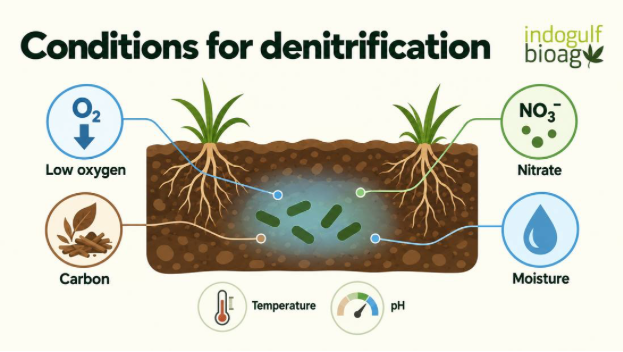
Moist soil, poor aeration, warm temperatures and a high supply of available carbon and nitrogen can increase this risk. Residue timing and soil conditions are therefore important components of greenhouse-gas management.
Soil Acidification and Biodiversity Changes
The conversion of ammonium into nitrate releases acidity. Where nitrate is leached or large quantities of nitrogen are removed in harvested products, long-term nitrogen inputs can contribute to declining soil pH.
This is not unique to biologically fixed nitrogen, but it means that legume-based systems still require soil-pH monitoring and appropriate liming where necessary.
Nitrogen enrichment can also alter plant-community composition. Species adapted to nutrient-rich conditions may outcompete plants that evolved under low-nitrogen conditions. Over time, excessive reactive nitrogen can reduce plant diversity and affect associated microorganisms, insects and other organisms.
Managing Nitrogen Fixation Responsibly
The environmental benefits of nitrogen fixation are greatest when nitrogen supply remains closely aligned with crop demand. Good management includes:
Selecting compatible crop–microorganism combinations
Using verified, viable inoculant strains
Accounting for biologically fixed nitrogen in fertilizer plans
Testing soil and monitoring crop nitrogen status
Avoiding unnecessary mineral nitrogen on effectively nodulated legumes
Establishing cover crops to capture residual nitrate
Managing legume residues to synchronise mineralisation with crop uptake
Monitoring soil pH and correcting acidity where required
Avoiding bare soil during high-risk leaching periods
Field performance also depends on soil pH, moisture, temperature, nutrient availability, microbial competition and inoculant formulation. A strain that performs well under controlled conditions may not establish or fix nitrogen effectively in every field.
Conclusion
Nitrogen fixation is environmentally essential because it introduces nitrogen into biological systems and supports plant productivity. Biological fixation can improve soil nitrogen cycling and reduce reliance on fossil-energy-intensive nitrogen fertilizer when used effectively.
However, biologically fixed nitrogen is not environmentally harmless once it enters the reactive nitrogen pool. Surplus nitrogen can contribute to nitrate leaching, eutrophication, nitrous oxide emissions, soil acidification and biodiversity change.
The most sustainable approach is therefore not to maximise nitrogen fixation without limit, but to integrate it with soil testing, crop rotations, fertilizer credits, residue management and continuous monitoring. This helps retain the agronomic value of fixed nitrogen while reducing its movement into water, air and sensitive ecosystems.


Comments